

Galleries >> Information Revolution Gallery
The Information Revolution Gallery traces humanity’s timeless quest to record, preserve, and share
knowledge. The journey begins with the Bhimbetka cave paintings, where early humans etched vivid scenes
of animals and daily life onto stone walls, marking the very dawn of human communication. Alongside these
primal images, fossils of plants and animals and the silent annular rings of trees remind us that nature itself
is an enduring recorder of time and memory.
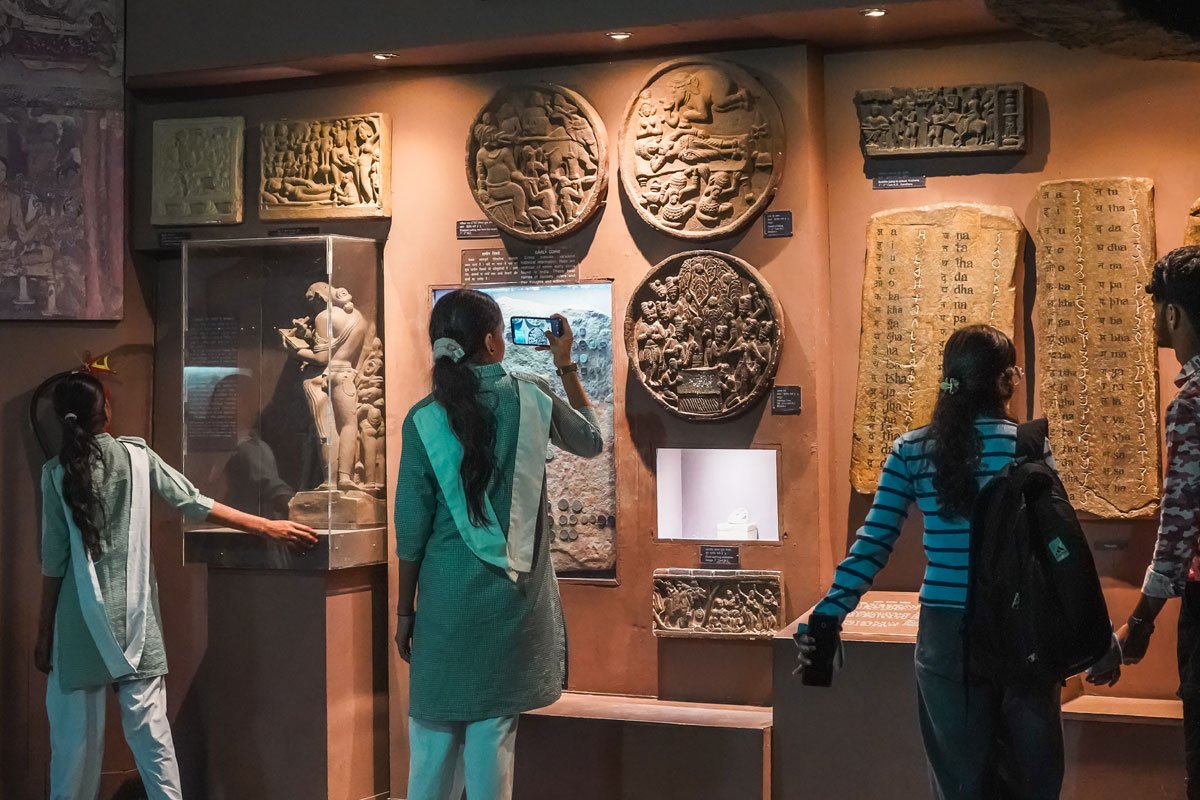
The narrative advances through the artifacts of the Indus Valley Civilization, old coins, and ancient scripts
such as Kharosti, Brahmi, and Pali — revealing how societies codified culture, belief, and identity across
millennia. Old statues, Ragmala paintings, the masks of India, and the expressive gestures of Angika
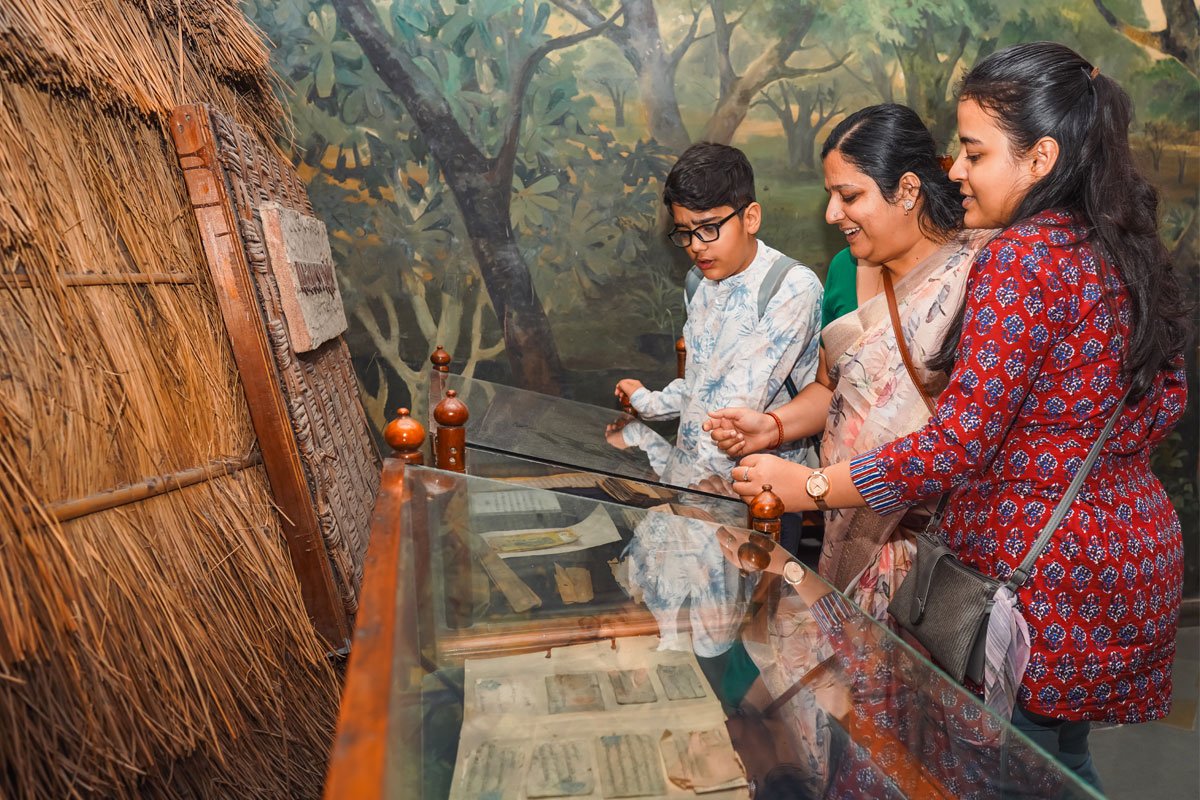
highlight how art, ritual, and performance became powerful mediums of storytelling. Manuscripts and the
tools of manuscript writing represent fragile yet enduring carriers of thought, bridging oral traditions with
structured archives.
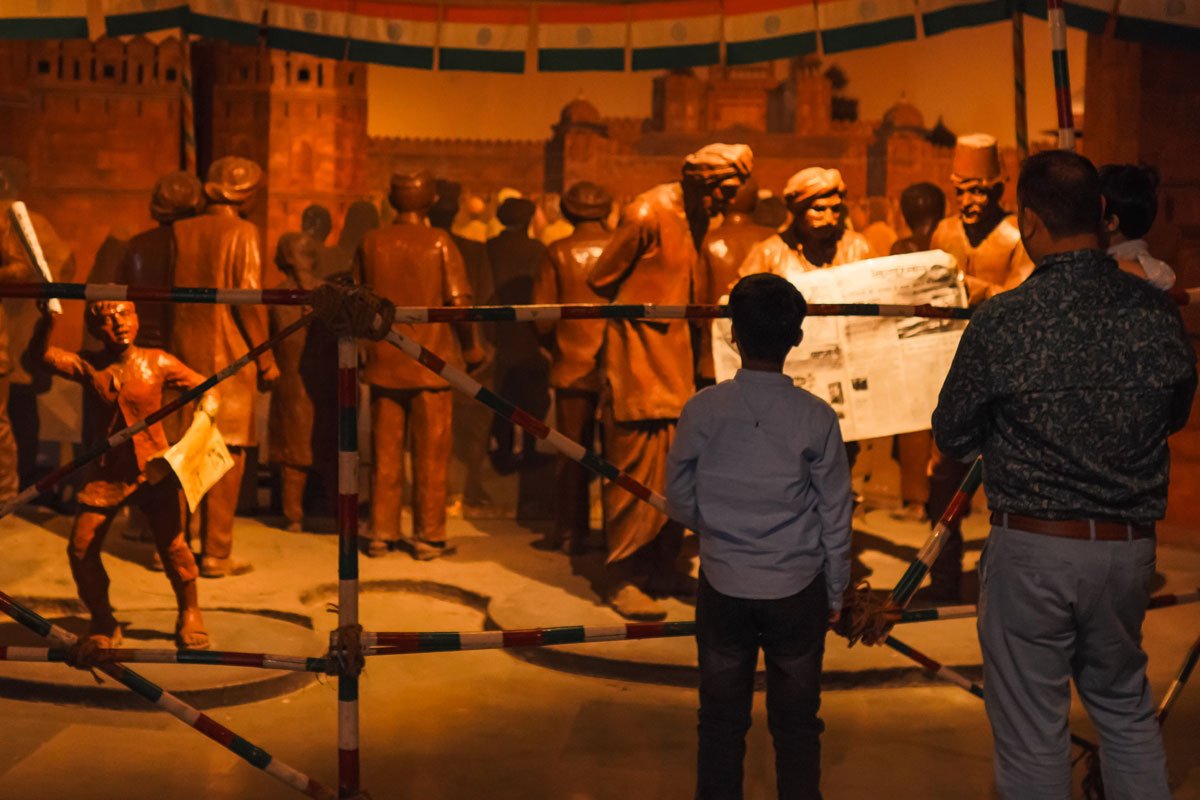
The revolution accelerates with the arrival of the printing press, newspapers, and the sharp wit of cartoons
and caricatures — technologies that democratised knowledge and gave voice to public opinion.
The
telegraph and lighthouse communication systems introduced speed and coded signals, while the
gramophone, motion pictures, and cameras — from pinhole to analogue to digital — expanded storytelling
into sound, vision, and memory. Modern print media and photography transformed information into mass
experience, while radio and television brought voices and images into homes.
Finally, the gallery enters the digital age. The invention of vacuum tubes, transistors, and integrated digital
electronics laid the foundation for modern computation. The arrival of the internet connected the world into a
single network, redefining communication, commerce, and community.
From cave walls to computer screens — the Information Revolution Gallery reveals a continuum of evolution
and innovation: humanity’s relentless drive to connect, remember, and communicate across generations. At
the close of this gallery, the exit leads visitors into the next chapter: the Digital World Gallery where the story continues into the age of the modern digital world.